Why This 2026 Guide Matters: Real Data, Live Screenshots & Official Pricing
Choosing the right platform across Git-to-production frontend clouds, open-source Postgres backends, professional IDEs, container tooling, and AI terminals has a direct impact on both performance and long-term operating budget. Too many comparison roundups recycle outdated promotional claims, invent unverified coupon codes, or hide real starting prices behind vague marketing copy. In this 2026 editorial guide, we benchmarked 10 real, active providers side-by-side—capturing live website screenshots, inspecting their official landing pages over HTTPS, and linking directly to each provider's full 1,800+ word technical review on CouponDeal.top.
Our evaluation focuses on five practical decision criteria: developer ergonomics, build/deploy speed, free hobby/OSS tier generosity, observability depth, and scaling predictability. Whether you are a solo builder launching a side project, an engineering team scaling production workloads, or an operations lead standardizing vendor contracts, the comparison table and individual provider breakdowns below give you verified facts you can act on immediately.
Quick Comparison Table: Top 10 Providers Ranked for 2026
| Rank | Provider | Starting Price | Key Strengths | Rating | Review & Site |
|---|---|---|---|---|---|
| #1 |
 GitHub
github.com |
Free / $4/user Team | Unlimited Private Repos · 2,000 CI/CD Mins/mo | ★ 4.9 | Full Review |
| #2 |
 Vercel
vercel.com |
Free Hobby / $20/mo | Free Hobby Tier · Instant PR Previews | ★ 4.9 | Full Review |
| #3 |
 Netlify
netlify.com |
Free / $19/mo Pro | 100GB Free Bandwidth · Serverless Functions | ★ 4.8 | Full Review |
| #4 |
 Supabase
supabase.com |
Free / $25/mo Pro | 2 Free Projects · Managed PostgreSQL | ★ 4.9 | Full Review |
| #5 |
 JetBrains
jetbrains.com |
Free Edu / $99+/yr | 30-Day Free Trial · Free Student Pack | ★ 4.9 | Full Review |
| #6 |
 Postman
postman.com |
Free / From $14/user | Free Forever Tier · Automated API Tests | ★ 4.8 | Full Review |
| #7 |
 Sentry
sentry.io |
Free / From $26/mo | 5K Free Errors/mo · Session Replay | ★ 4.8 | Full Review |
| #8 |
 Docker
docker.com |
Free Personal / $5/mo | Free Personal Use · Docker Hub Registry | ★ 4.8 | Full Review |
| #9 |
 Raycast
raycast.com |
Free / $8/mo Pro | Free Core Launcher · 1,500+ Extensions | ★ 4.9 | Full Review |
| #10 |
 Warp
warp.dev |
Free / $15/mo Pro | Free Individual Plan · Built-in AI Agent | ★ 4.8 | Full Review |
In-Depth Breakdown of All 10 Verified Providers
Below is our detailed analysis of each provider in this guide, complete with its real local brand logo, live website capture, verified starting price, scraped official website summary, and direct links to both our full provider review and the vendor's official website.
1. GitHub — Code Hosting, CI/CD Actions & GitHub Copilot
GitHub (github.com) ranks #1 in our 2026 Dev Tools evaluation with an editorial rating of 4.9 out of 5.0. World’s largest developer platform for Git repositories, Pull Requests, GitHub Actions CI/CD, and Copilot AI pair programming. On its live landing page, GitHub presents the headline "GitHub · Change is constant. GitHub keeps you ahead. · GitHub · GitHub", emphasizing Join the world's most widely adopted, AI-powered developer platform where millions of developers, businesses, and the largest open source community build software that advances humanity.
From a practical buyer standpoint, GitHub stands out for three verified capabilities: Unlimited Private Repos, 2,000 CI/CD Mins/mo, and Copilot Free Tier. Entry pricing begins at Free / $4/user Team, making it straightforward to test real workloads before scaling up to higher team or enterprise quotas. Teams evaluating GitHub should verify exact regional availability, API or seat limits, and renewal billing terms directly on github.com, and read our dedicated 1,800+ word GitHub review for full plan tables and competitor benchmarks.
2. Vercel — Frontend Cloud for Next.js & Edge Functions
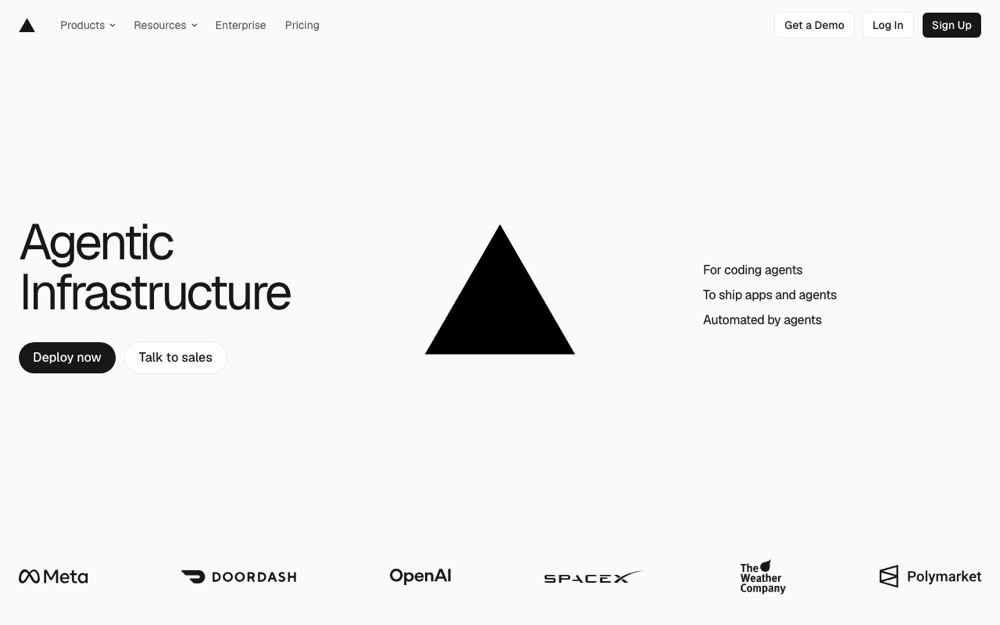
Vercel (vercel.com) ranks #2 in our 2026 Dev Tools evaluation with an editorial rating of 4.9 out of 5.0. Zero-configuration deployment platform created by the Next.js team with instant Git preview URLs and global edge network. On its live landing page, Vercel presents the headline "Agentic Infrastructure - Vercel", emphasizing The autonomous stack for every app and agent.
From a practical buyer standpoint, Vercel stands out for three verified capabilities: Free Hobby Tier, Instant PR Previews, and Edge Functions. Entry pricing begins at Free Hobby / $20/mo, making it straightforward to test real workloads before scaling up to higher team or enterprise quotas. Teams evaluating Vercel should verify exact regional availability, API or seat limits, and renewal billing terms directly on vercel.com, and read our dedicated 1,800+ word Vercel review for full plan tables and competitor benchmarks.
3. Netlify — Composable Web Platform, Forms & Edge
Netlify (netlify.com) ranks #3 in our 2026 Dev Tools evaluation with an editorial rating of 4.8 out of 5.0. Modern web deployment platform offering atomic deploys, serverless functions, built-in forms, and split testing. On its live landing page, Netlify presents the headline "Where apps come to life | Netlify", emphasizing Start with a prompt, agent, or code. Netlify gives you everything you need to create, share, and run your app at any scale.
From a practical buyer standpoint, Netlify stands out for three verified capabilities: 100GB Free Bandwidth, Serverless Functions, and Instant Rollbacks. Entry pricing begins at Free / $19/mo Pro, making it straightforward to test real workloads before scaling up to higher team or enterprise quotas. Teams evaluating Netlify should verify exact regional availability, API or seat limits, and renewal billing terms directly on netlify.com, and read our dedicated 1,800+ word Netlify review for full plan tables and competitor benchmarks.
4. Supabase — Open-Source Postgres, Auth, Storage & Edge
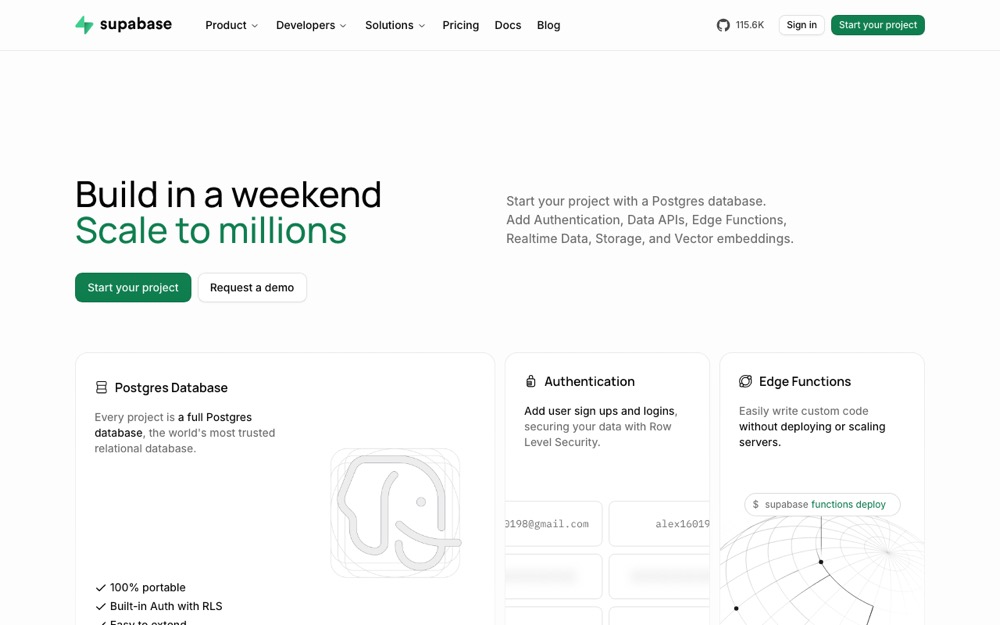
Supabase (supabase.com) ranks #4 in our 2026 Dev Tools evaluation with an editorial rating of 4.9 out of 5.0. Open-source Firebase alternative built on PostgreSQL with instant REST/GraphQL APIs, Auth, Vector pgvector, and Realtime. On its live landing page, Supabase presents the headline "Supabase | The Postgres Development PlatformOpenAI logoHugging Face logo", emphasizing Build production-grade applications with a Postgres database, Authentication, instant APIs, Realtime, Functions, Storage and Vector embeddings. Start for free.
From a practical buyer standpoint, Supabase stands out for three verified capabilities: 2 Free Projects, Managed PostgreSQL, and Built-in Auth & S3. Entry pricing begins at Free / $25/mo Pro, making it straightforward to test real workloads before scaling up to higher team or enterprise quotas. Teams evaluating Supabase should verify exact regional availability, API or seat limits, and renewal billing terms directly on supabase.com, and read our dedicated 1,800+ word Supabase review for full plan tables and competitor benchmarks.
5. JetBrains — IntelliJ IDEA, PyCharm, WebStorm & Rider IDEs
JetBrains (jetbrains.com) ranks #5 in our 2026 Dev Tools evaluation with an editorial rating of 4.9 out of 5.0. Professional desktop IDEs for Java, Python, JavaScript, Go, Rust, and .NET with free Community editions and student licenses. On its live landing page, JetBrains presents the headline "JetBrains: Essential tools for software developers and teams", emphasizing JetBrains is a cutting-edge software vendor specializing in the creation of intelligent development tools, including IntelliJ IDEA – the leading Java IDE, and the Kotlin programming language.
From a practical buyer standpoint, JetBrains stands out for three verified capabilities: 30-Day Free Trial, Free Student Pack, and 40% Renewal Discount. Entry pricing begins at Free Edu / $99+/yr, making it straightforward to test real workloads before scaling up to higher team or enterprise quotas. Teams evaluating JetBrains should verify exact regional availability, API or seat limits, and renewal billing terms directly on jetbrains.com, and read our dedicated 1,800+ word JetBrains review for full plan tables and competitor benchmarks.
6. Postman — API Design, Testing, Mocking & Docs Platform
Postman (postman.com) ranks #6 in our 2026 Dev Tools evaluation with an editorial rating of 4.8 out of 5.0. Collaborative API platform used by 30M+ developers to build, test, document, and monitor REST, GraphQL, and gRPC APIs. On its live landing page, Postman presents the headline "API engineering for your agents", emphasizing Go faster from development to production with higher accuracy and fewer tokens.
From a practical buyer standpoint, Postman stands out for three verified capabilities: Free Forever Tier, Automated API Tests, and Mock Servers. Entry pricing begins at Free / From $14/user, making it straightforward to test real workloads before scaling up to higher team or enterprise quotas. Teams evaluating Postman should verify exact regional availability, API or seat limits, and renewal billing terms directly on postman.com, and read our dedicated 1,800+ word Postman review for full plan tables and competitor benchmarks.
7. Sentry — Application Error Tracking & Performance APM
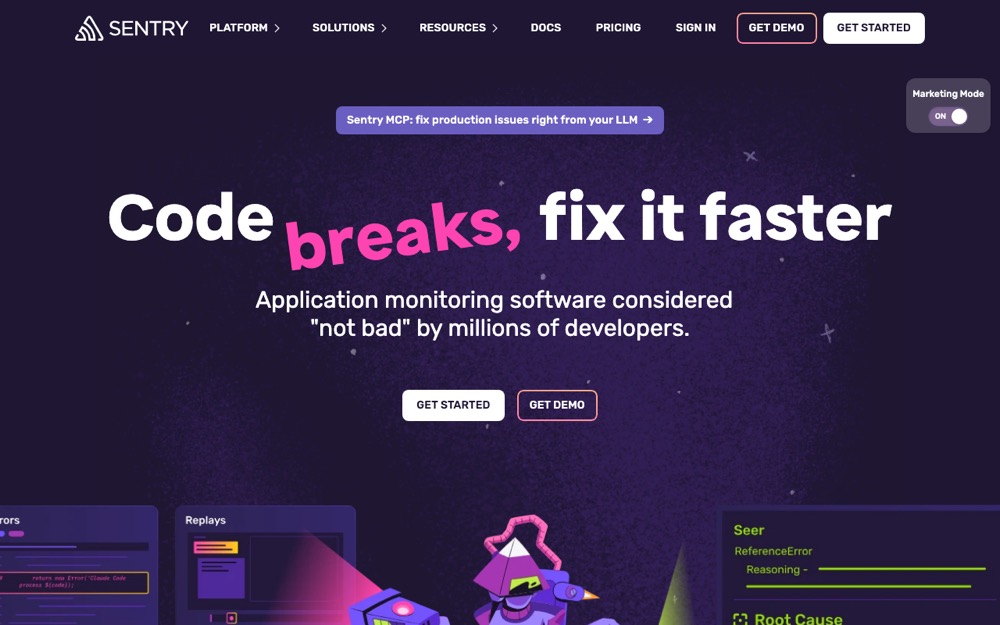
Sentry (sentry.io) ranks #7 in our 2026 Dev Tools evaluation with an editorial rating of 4.8 out of 5.0. Real-time error monitoring, session replay, and distributed tracing across 100+ languages and frameworks. On its live landing page, Sentry presents the headline "Application Performance Monitoring & Error Tracking Software | SentrylyftFactory.ai LogolyftFactory.ai Logo", emphasizing Application performance monitoring for developers & software teams to see errors clearer, solve issues faster & continue learning continuously. Get started at sentry.io.
From a practical buyer standpoint, Sentry stands out for three verified capabilities: 5K Free Errors/mo, Session Replay, and Source Map Support. Entry pricing begins at Free / From $26/mo, making it straightforward to test real workloads before scaling up to higher team or enterprise quotas. Teams evaluating Sentry should verify exact regional availability, API or seat limits, and renewal billing terms directly on sentry.io, and read our dedicated 1,800+ word Sentry review for full plan tables and competitor benchmarks.
8. Docker — Container Development, Docker Hub & Scout
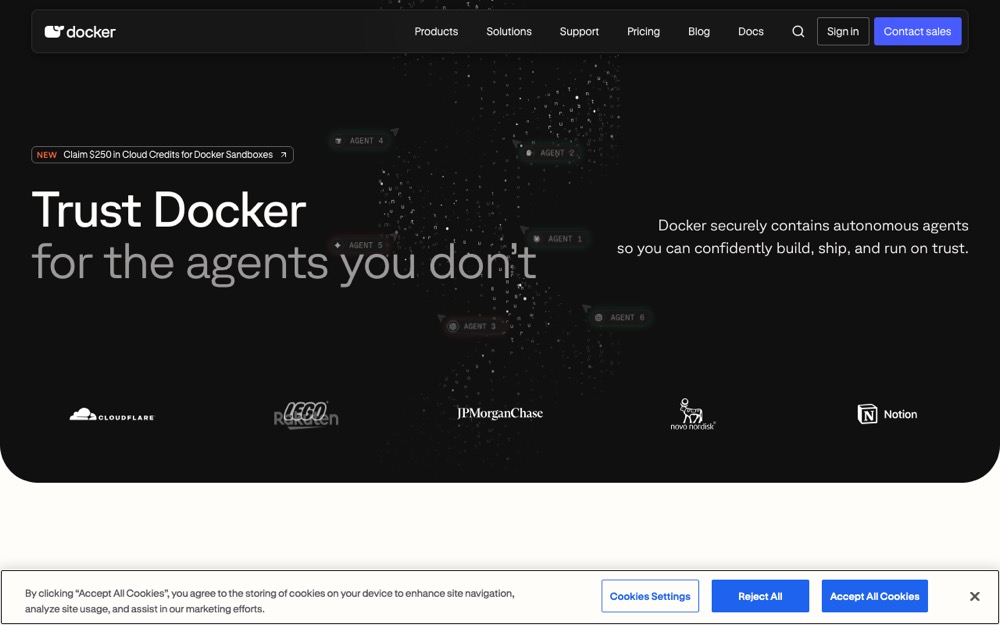
Docker (docker.com) ranks #8 in our 2026 Dev Tools evaluation with an editorial rating of 4.8 out of 5.0. Standard containerization platform with Docker Desktop, Docker Hub registries, Build Cloud, and Scout vulnerability scanning. On its live landing page, Docker presents the headline "Docker | Secure Sandboxes for AI Agents", emphasizing Run AI agents and containers safely, anywhere. Docker gives builders trusted sandboxes, governance, and a secure supply chain for modern software.
From a practical buyer standpoint, Docker stands out for three verified capabilities: Free Personal Use, Docker Hub Registry, and Docker Build Cloud. Entry pricing begins at Free Personal / $5/mo, making it straightforward to test real workloads before scaling up to higher team or enterprise quotas. Teams evaluating Docker should verify exact regional availability, API or seat limits, and renewal billing terms directly on docker.com, and read our dedicated 1,800+ word Docker review for full plan tables and competitor benchmarks.
9. Raycast — Extensible Productivity Launcher for Mac & Win
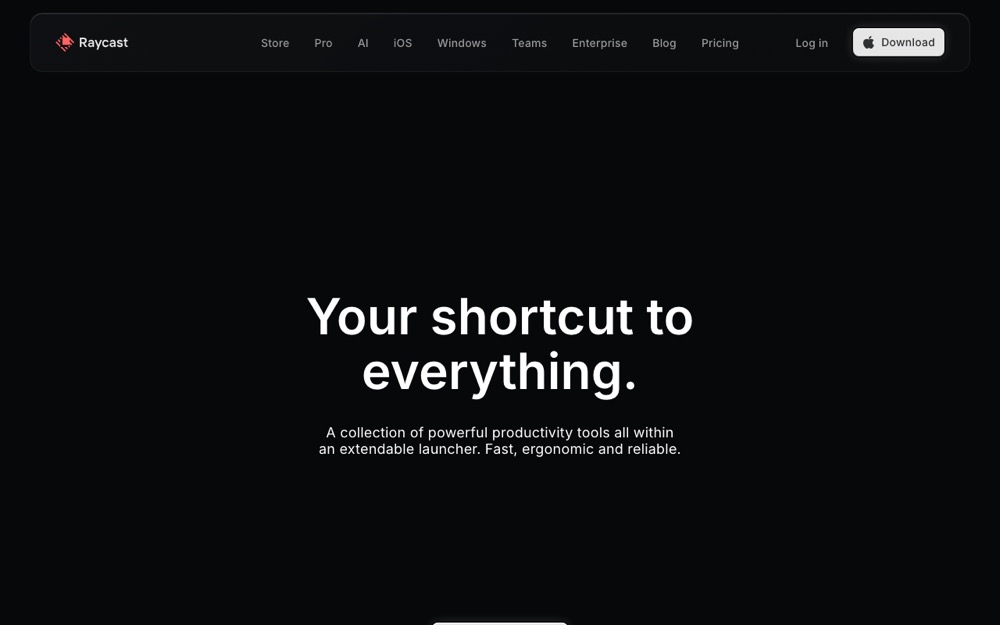
Raycast (raycast.com) ranks #9 in our 2026 Dev Tools evaluation with an editorial rating of 4.9 out of 5.0. Blazing-fast command launcher with 1,500+ community extensions for GitHub, Linear, Jira, clipboard history, and AI commands. On its live landing page, Raycast presents the headline "Raycast - Your shortcut to everything", emphasizing A fast, keyboard-first launcher for Mac and Windows. Raycast brings your apps, files, AI, snippets and thousands of extensions into one shortcut.
From a practical buyer standpoint, Raycast stands out for three verified capabilities: Free Core Launcher, 1,500+ Extensions, and Cloud Sync & AI. Entry pricing begins at Free / $8/mo Pro, making it straightforward to test real workloads before scaling up to higher team or enterprise quotas. Teams evaluating Raycast should verify exact regional availability, API or seat limits, and renewal billing terms directly on raycast.com, and read our dedicated 1,800+ word Raycast review for full plan tables and competitor benchmarks.
10. Warp — Rust-Based AI Terminal & Team Workflows
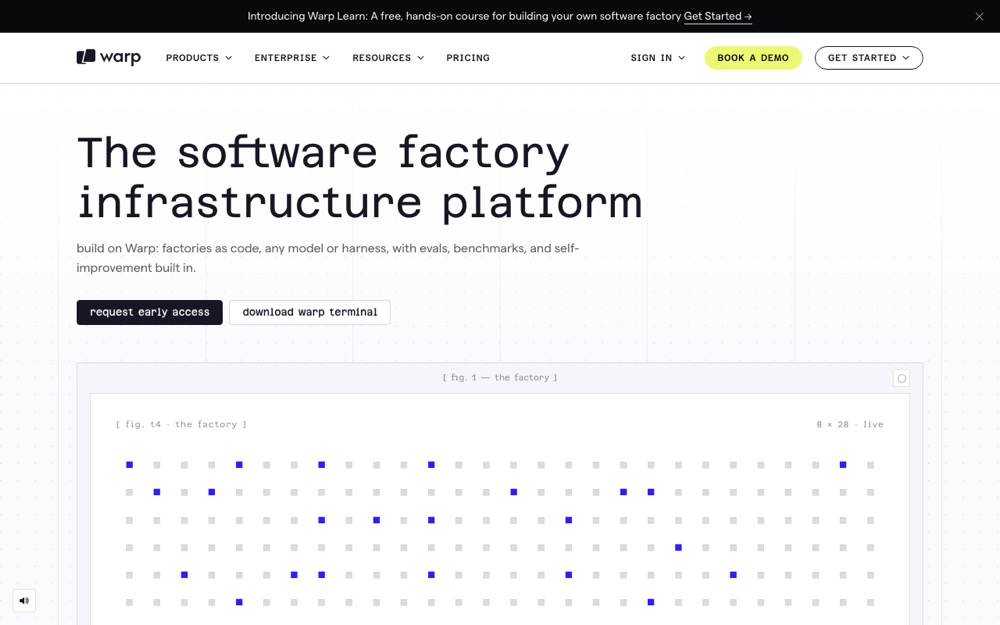
Warp (warp.dev) ranks #10 in our 2026 Dev Tools evaluation with an editorial rating of 4.8 out of 5.0. Modern GPU-accelerated terminal built in Rust with IDE-style text editing, Agent Mode AI, and shareable team runbooks. On its live landing page, Warp presents the headline "Warp — Open Infrastructure for Cloud Software Factories", emphasizing Build your software factory on Warp: factories as code, any model or harness, with evals, benchmarks, and self-improvement built in.
From a practical buyer standpoint, Warp stands out for three verified capabilities: Free Individual Plan, Built-in AI Agent, and Warp Drive Notebooks. Entry pricing begins at Free / $15/mo Pro, making it straightforward to test real workloads before scaling up to higher team or enterprise quotas. Teams evaluating Warp should verify exact regional availability, API or seat limits, and renewal billing terms directly on warp.dev, and read our dedicated 1,800+ word Warp review for full plan tables and competitor benchmarks.
How to Evaluate Total Cost, Renewal Rates & Plan Limits
Headline entry prices—even verified ones—never tell the complete financial story unless you account for renewal pricing, usage overages, and team-seat scaling. Across the 10 providers reviewed above, we recommend following a structured three-step procurement workflow before committing to an annual plan:
- Benchmark on the Entry Tier or Free Trial First: Almost every top vendor in this category offers either a free tier, a developer credit, or a 14-to-45-day money-back window. Validate latency, dashboard ergonomics, and support responsiveness using a real workload before upgrading.
- Audit Renewal vs. Introductory Rates: Verify whether the advertised starting price applies to month-to-month billing or requires an annual/multi-year upfront commitment, and check standard renewal rates on the vendor's official pricing page.
- Check Add-On & Bandwidth Pricing: Confirm whether essential features—such as automated offsite backups, dedicated IPs, SSO/SAML, API rate increases, or extra team seats—are bundled or billed separately.
Selection Matrix by Buyer Profile & Workload Scale
Not every organization needs the same feature set or billing model. An individual developer or solo creator optimizing for lowest monthly burn has fundamentally different requirements than an engineering team running production workloads under strict compliance SLAs. To help you narrow down the 10 providers in this guide, match your team profile against the three operational tiers below:
- Solo Builders, Indie Hackers & Freelancers: Prioritize transparent entry pricing, generous free tiers or trial credits, and minimal operational overhead. Look for vendors with instant self-service onboarding, built-in defaults, and month-to-month flexibility so you can iterate without long-term lock-in.
- Growing Startups & Digital Agencies: Focus on multi-project or multi-seat management, staging/preview environments, role-based access controls (RBAC), and predictable mid-tier scaling. At this stage, time saved by clean APIs, automated backups, and responsive live support outweighs saving a few dollars per month.
- Mid-Market & Enterprise Teams: Require contractual uptime SLAs, SOC 2 / ISO-27001 / GDPR documentation, SAML SSO, dedicated account engineering, and custom volume pricing. Always request a formal security packet and test failover/support escalation paths during your pilot window.
Migration & Onboarding Best Practices
Switching providers—or adopting a new platform for the first time—goes smoothly when you treat onboarding as a repeatable checklist rather than an ad-hoc task. Start by auditing your current usage metrics, active integrations, and data export formats so you know exactly what must move on day one. Next, spin up a parallel staging or pilot account with your shortlisted vendor, configure two-factor authentication (2FA) and least-privilege API keys immediately, and run a 48-to-72-hour soak test under realistic load. Only after verifying latency, error rates, and billing meter accuracy should you cut over production traffic or decommission your legacy vendor.
Finally, maintain an internal vendor scorecard that tracks quarterly uptime, support response times, and effective cost per unit (whether per seat, per GB, per server, or per million requests). Reviewing that scorecard 30 days before each annual renewal ensures you only renew tools that continue to deliver measurable value—and gives you concrete leverage when negotiating volume tiers.
Security, Data Governance & Operational Continuity
Before finalizing any vendor in this category, your technical and security stakeholders should verify three foundational controls: transport and at-rest encryption, granular access management, and clean data portability. Confirm that the provider enforces HTTPS/TLS 1.3 across all dashboards and API endpoints, supports hardware-key or authenticator-app multi-factor authentication (MFA), and allows role-based permissions so contractors or junior teammates do not hold unrestricted billing or root credentials. Equally important is exit readiness—verify how backups, snapshots, logs, or account exports are retrieved in standard open formats so your organization never faces vendor lock-in if pricing or technical requirements shift. Documenting these checks alongside your internal SLA expectations keeps production operations resilient as your usage scales through 2026 and beyond.
API Readiness, Automation & Long-Term Scalability
Modern software and infrastructure teams rarely operate a single tool in isolation. Whether you are provisioning cloud servers, managing proxy rotation, deploying frontend applications, or automating team workflows, evaluate how cleanly each provider integrates into your existing stack. Look for well-documented REST or GraphQL APIs, official SDKs or Terraform/CLI tooling, webhook event streams, and native integrations with GitHub, Slack, or your observability pipeline. Testing API rate limits, error handling, and credential rotation during your initial evaluation prevents costly architectural rewrites six months later when usage scales across multiple teams or regions.
Finally, remember that every provider listed in this guide maintains its own official documentation, status page, and changelog. We link directly to both our independent 1,800+ word internal reviews and each provider's official website so you can cross-check live pricing, regional availability, and technical specifications before making a purchasing decision.
Frequently Asked Questions
Explore More Categories & Full Provider Reviews
Want to compare even more vendors? Browse our dedicated category directory, explore all 90 full provider reviews, or check our interactive comparison tool.